1. It joins the call
From your Google or Microsoft calendar, the notetaker joins Meet and Teams calls on time. Or record from the Chrome extension, with no bot in the room.
Meetings
Nobody takes notes. A notetaker joins the call, and a few minutes after it ends the project has the summary, the decisions and who does what by when.

From your Google or Microsoft calendar, the notetaker joins Meet and Teams calls on time. Or record from the Chrome extension, with no bot in the room.
The whole call becomes text, with each speaker named.
An executive summary, the decisions and who made them, blockers, loose ends and action items, in English, Portuguese or Spanish.
Tasks go to the board of beings or to Jira, ClickUp and Trello. You can require an approval before anything is sent.
Tasks
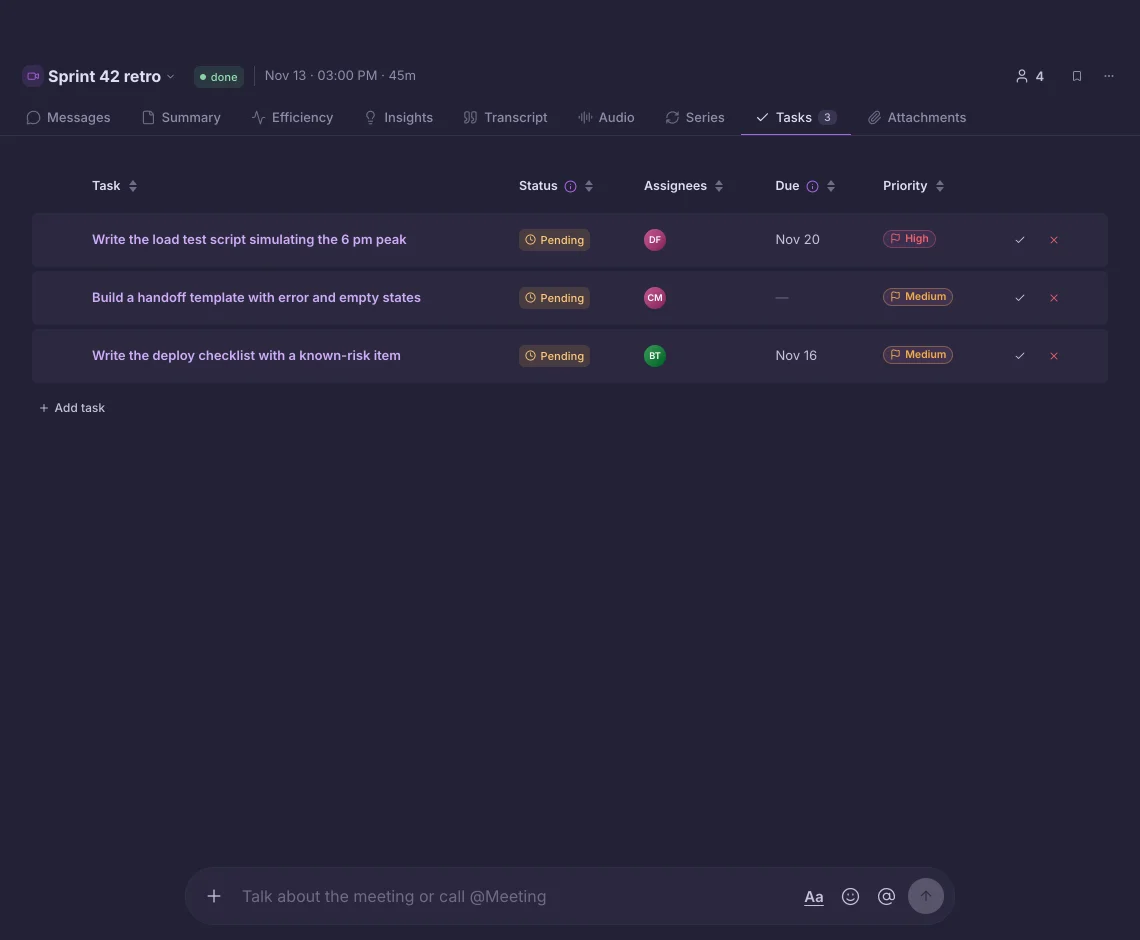
Each task leaves the call with an owner, a priority, a date and the context that created it.
The board
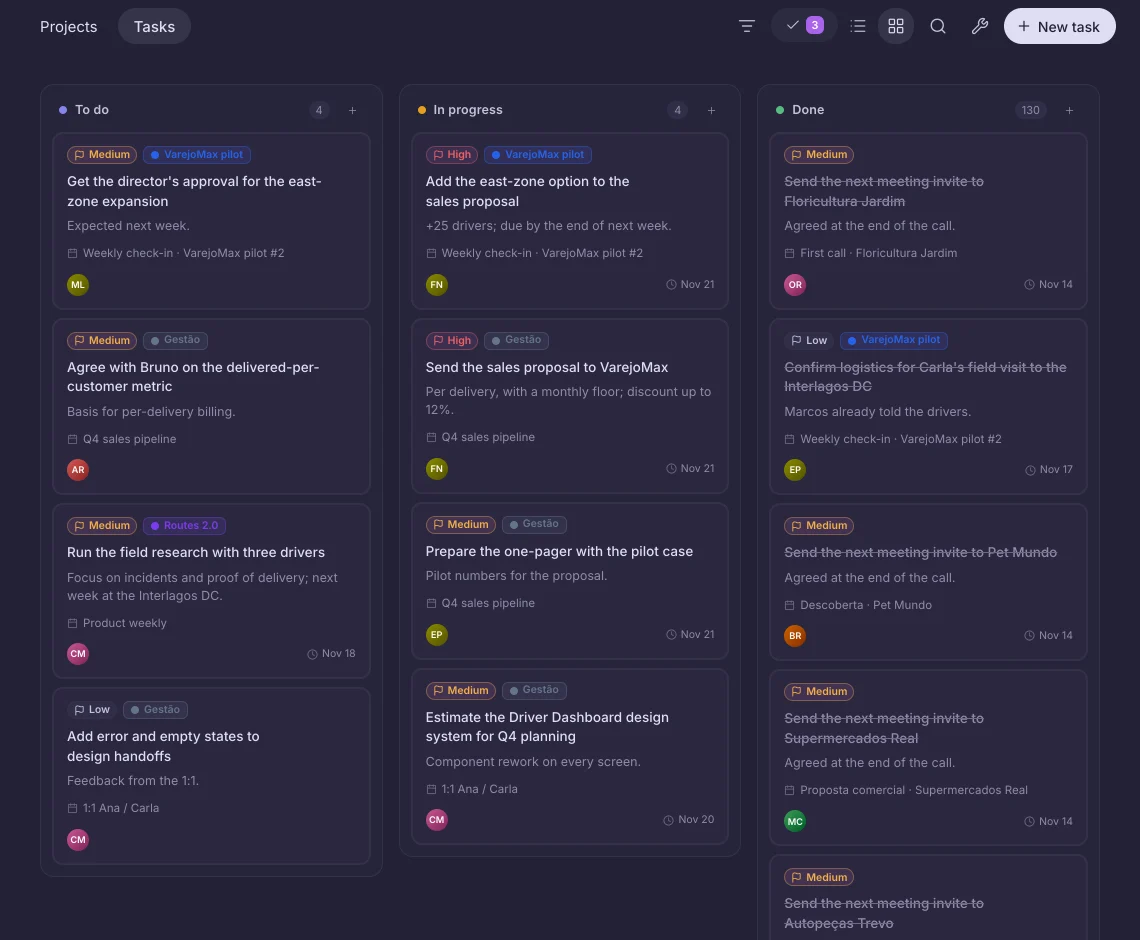
Tasks from every call and conversation meet on one board, grouped by project. Put a person or an agent in charge of each one.
And also
Every meeting has a chat. Mention @Meeting and ask what was said about a subject.
A public link with your availability. The booked call already comes with the notetaker.
Voice notes go through the same path: summary, memory and tasks.
With the Sales program, each customer call is scored against your playbook.
Start with your team and one agent. Add more beings as the work grows.
15-day free trial